
Updated November 2026
Short answer first. If you have flat feet and your ankles roll inward when you run, buy a stability shoe, not a neutral one. The three safest places to start are the Brooks Adrenaline GTS 24 for everyday miles, the ASICS Gel-Kayano 32 if you want the newest flagship, and the Brooks Beast GTS 24 if you need the strongest support anyone sells. On a budget, the ASICS Gel-Kayano 31 is the same idea as the 32 for less money while stock lasts. Below we explain why flat feet need this kind of shoe, then go through seven current models with prices checked on November 9, 2026.
How do the top picks compare at a glance?
| Shoe | Best for | Weight | Drop | Support type | Price |
|---|---|---|---|---|---|
| Brooks Adrenaline GTS 24 | Everyday miles, best all rounder | 10.4 oz | 12 mm | GuideRails | $99.88 on sale, list $140 |
| ASICS Gel-Kayano 32 | Newest flagship stability | 10.8 oz | 8 mm | 4D Guidance System | $124.95 on sale, list $165 |
| ASICS Gel-Kayano 31 | Best value while stock lasts | 11.2 oz | 10 mm | 4D Guidance System | $124.95 on sale, list $165 |
| Brooks Beast GTS 24 | Maximum support | 12.4 oz | 12 mm | GuideRails, motion control | $119.95 on sale, list $160 |
| Saucony Hurricane 24 | Max cushion with stability | 10.6 oz | 6 mm | CenterPath | $131.65 |
| Hoka Arahi 8 | Lightest stability shoe here | 9.8 oz | 8 mm | H-Frame | $100 on sale, list $150 |
| New Balance Fresh Foam X 860 v15 | Wide feet and long runs | 11.6 oz | 6 mm | Stability Plane | $149.99 |
Weights are men’s reference sizes. Prices move fast during Black Friday season, so treat them as checked on the date above rather than guaranteed.
For a broader look at this year’s best shoes, see our guide to the best running shoes of 2026.
Why do flat feet need a stability shoe at all?
Here is the plain version. A flat foot has a low arch, so when it lands, it tends to keep rolling inward longer than a higher arched foot does. That inward roll is called overpronation. A bit of roll is normal and absorbs impact. Too much of it means your ankle, shin and knee get twisted a little with every stride, thousands of times per run.
A stability shoe does not try to force your foot into a new shape. It just puts firmer material or a frame on the inner side of the shoe so the roll slows down and stops sooner. Brooks calls its version GuideRails, two firm rails that sit on either side of your heel and only push back when your stride drifts too far. ASICS uses a guidance system built into the midsole geometry. Saucony uses a wide, shaped platform it calls CenterPath. Different names, same job: support that shows up when you need it and stays out of the way when you do not.
One caution. A shoe can make running more comfortable for flat feet, but it is not a treatment for pain. If you have ongoing foot, ankle or knee pain, get a proper assessment from a clinician or a good running store gait analysis before spending money. Nothing in this guide is medical advice.
Which Brooks should most flat footed runners start with? The Adrenaline GTS 24
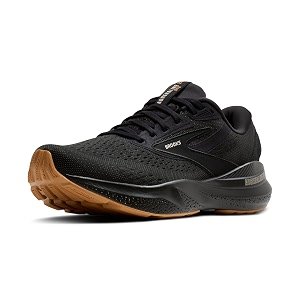
The Adrenaline has been the default answer to “I overpronate, what do I buy” for over a decade, and the GTS 24 is the current sweet spot in the range. It uses Brooks GuideRails support with DNA LOFT v3 foam, a 12 mm drop and a 39 mm heel stack, which adds up to a shoe that feels familiar and planted rather than corrective. It also comes in narrow, medium, wide and extra wide, which matters because flat feet are often wide feet too.
At $140 list it was already fair value. At the $99.88 sale price we found at Confluence Running on November 9, it is the easiest recommendation in this guide for daily training, easy runs and long walks.
Worth knowing: the Adrenaline GTS 25 is the newer version, with a lower 10 mm drop and a $155 list price. It is a fine shoe, but the 24 does the same job for a lot less right now, and Black Friday pricing widens that gap. Start with the 24 unless you specifically want the newer fit.
Is the ASICS Gel-Kayano 32 worth it over the 31?
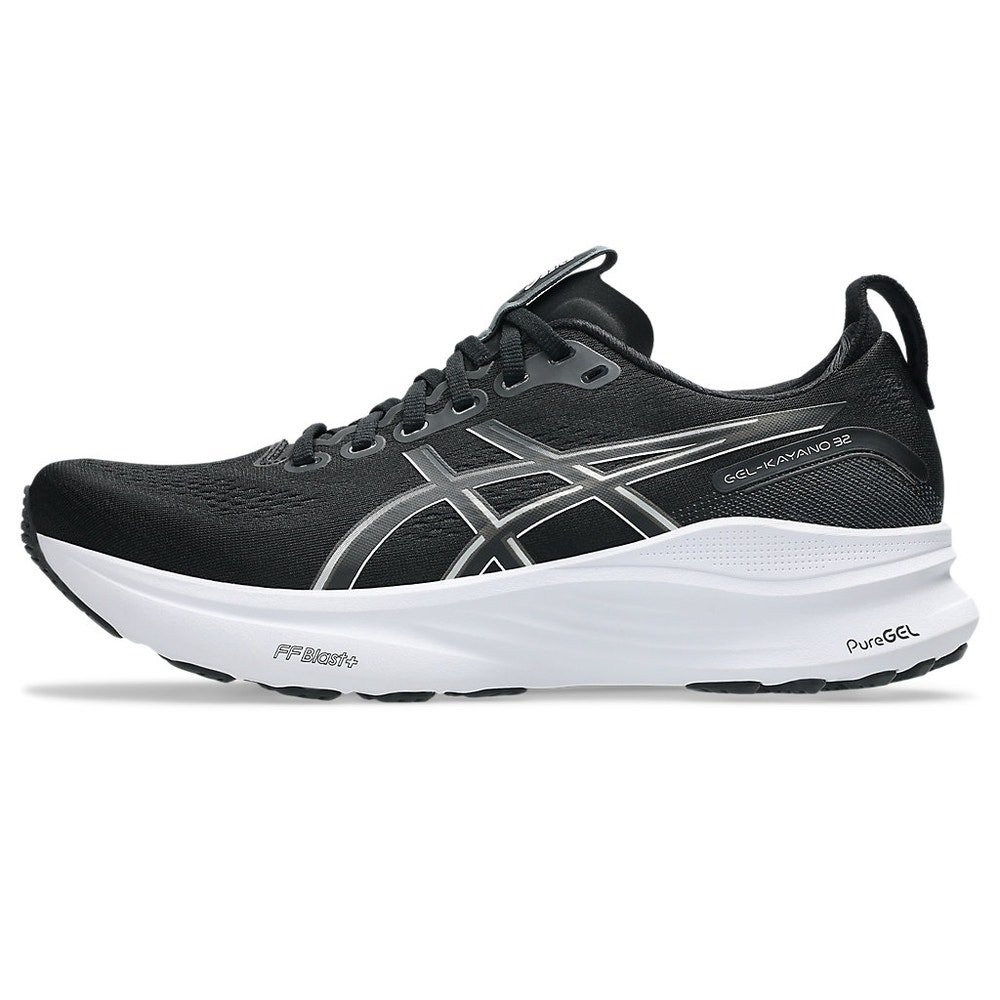
The Kayano line is ASICS answer to the Adrenaline, and the Gel-Kayano 32 is the current flagship. It runs an 8 mm drop, a 40 mm heel stack and the 4D Guidance System, which uses the shape of the midsole and a softer inner section to guide the foot instead of a hard post. Most testers describe the 32 as firmer and more stable feeling than the 31, which makes it the better pick if your roll is pronounced and you want the current model.
The catch is simple. We could not verify an exact Amazon listing code for the Kayano 32 to the standard we require before adding a buy button (two independent sources matching the same code to this exact model), so this pick carries no buy button in this draft. It is widely available at running retailers at $124.95 on sale from a $165 list price, checked at Zappos on November 9. When you shop for it, check the style code 1011C052 on the listing to be sure you are looking at the 32 and not older stock.
Why is the older ASICS Gel-Kayano 31 the value pick?
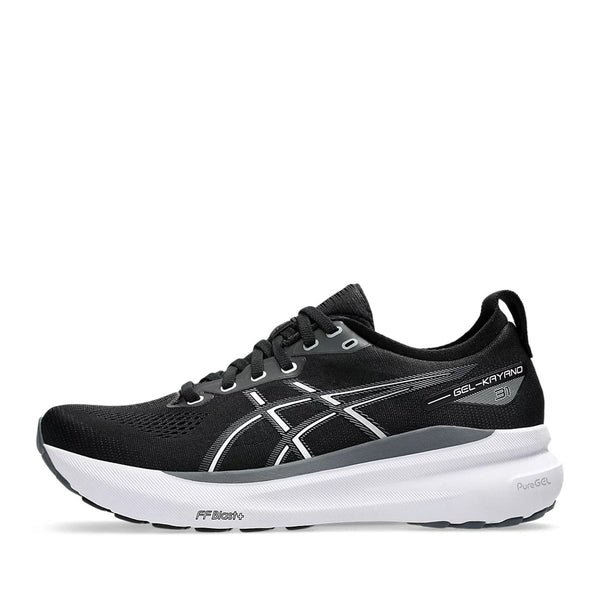
Because the 32 exists. The Gel-Kayano 31 has a 10 mm drop, a slightly softer ride than the 32 and the same 4D Guidance family of support, and retailers are clearing it at $124.95 against a $165 list price. Fit2Run, FrontRunners LA and Zappos all showed that price on November 9. If you like a softer step in feel and do not mind last season’s model, the 31 gives you flagship level stability for mid range money.
It will not stay in stock forever in every size, which is the only real downside. If your size is there at the sale price, it is the best value stability shoe in this guide alongside the discounted Adrenaline.
What if you need the strongest support anyone sells? The Brooks Beast GTS 24
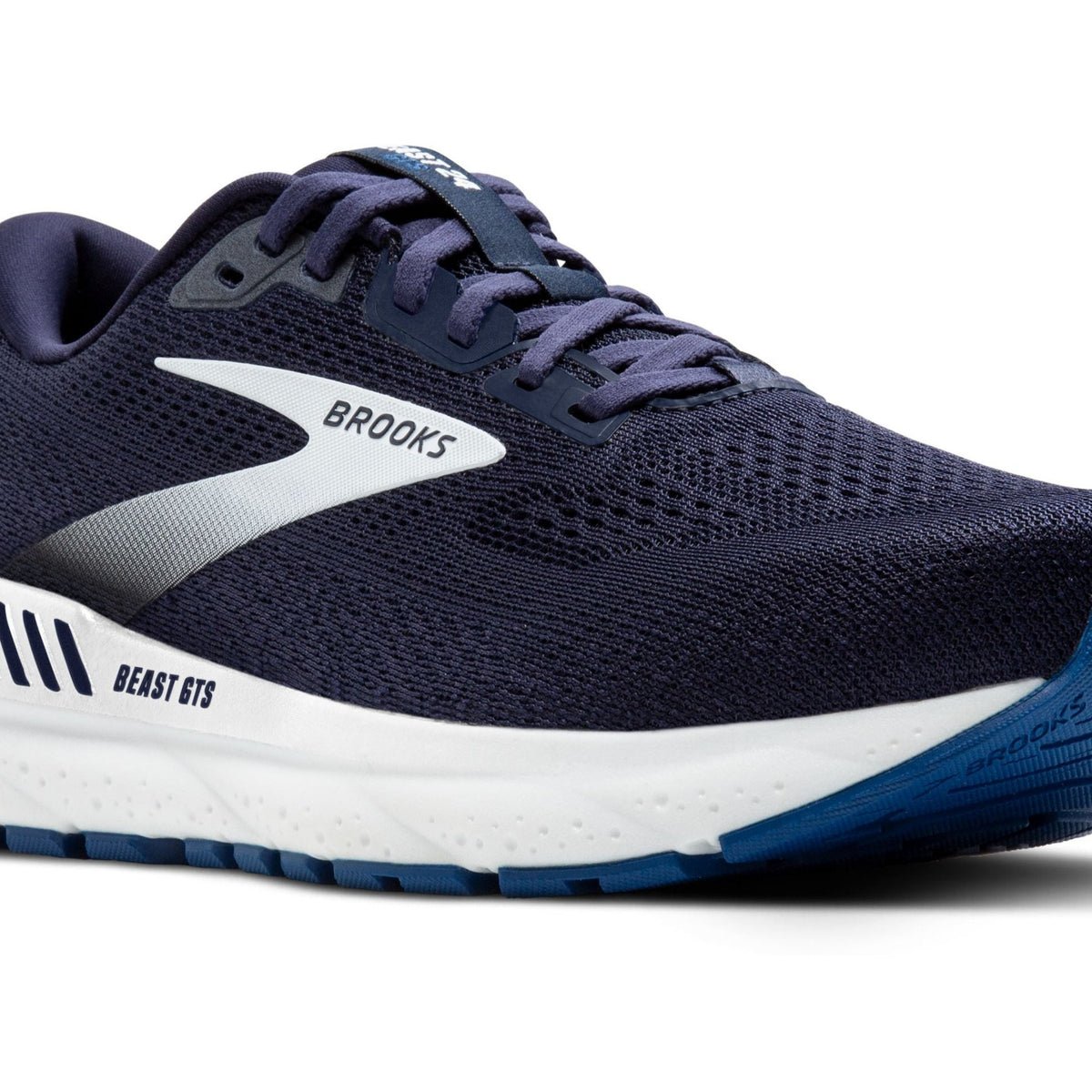
Most roundups skip the Beast, which is a mistake for genuinely flat feet. The Beast GTS 24 is Brooks maximum support shoe, built for serious overpronation and for heavier runners who blow through softer stability shoes. You get GuideRails, the most cushioning Brooks offers, a broad base, a 12 mm drop and sizes up to extra wide. The women’s version is the Ariel GTS 24.
At 12.4 oz it is the heaviest shoe here and nobody would call it quick. That is not its job. Its job is to keep a strong roll in check on daily miles, work shifts and long walks, and it does that better than anything else on this page. Danform Shoes had it at $119.95 against a $160 list price on November 9, which is a lot of shoe for the money.
Can a max cushion shoe still control pronation? The Saucony Hurricane 24 can
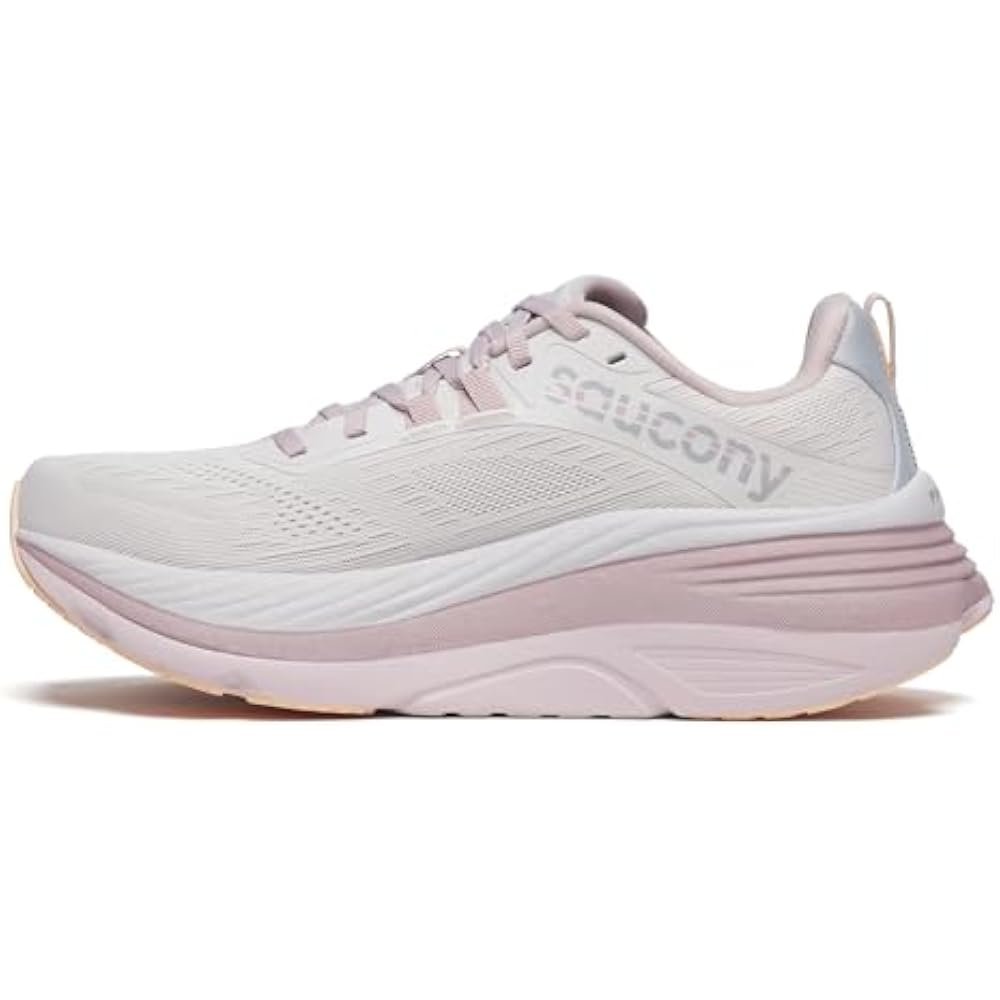
The Hurricane 24 is the pick for runners who want a soft, high stack shoe but still need guidance. Saucony pairs a PWRRUN PB foam core with a PWRRUN frame and its CenterPath design, which uses a wide base and raised sidewalls to cradle the foot. The result is a stability shoe that feels like a cushioned trainer first and a control shoe second. Specs: 38 mm heel stack, a low 6 mm drop and 10.6 oz in the men’s version.
It is also the shoe most “best stability” lists leave out, which is a shame, because for flat footed runners who find the Kayano and Adrenaline a bit firm or a bit dull, this is the comfortable alternative. Price history tracking showed $131.65 in the US against a $159.95 list price in early November.
Note: the verified listing above is a women’s variant of the Hurricane 24. Use the size and gender options on the product page to select the men’s version.
Which stability shoe feels the least like a stability shoe? The Hoka Arahi 8
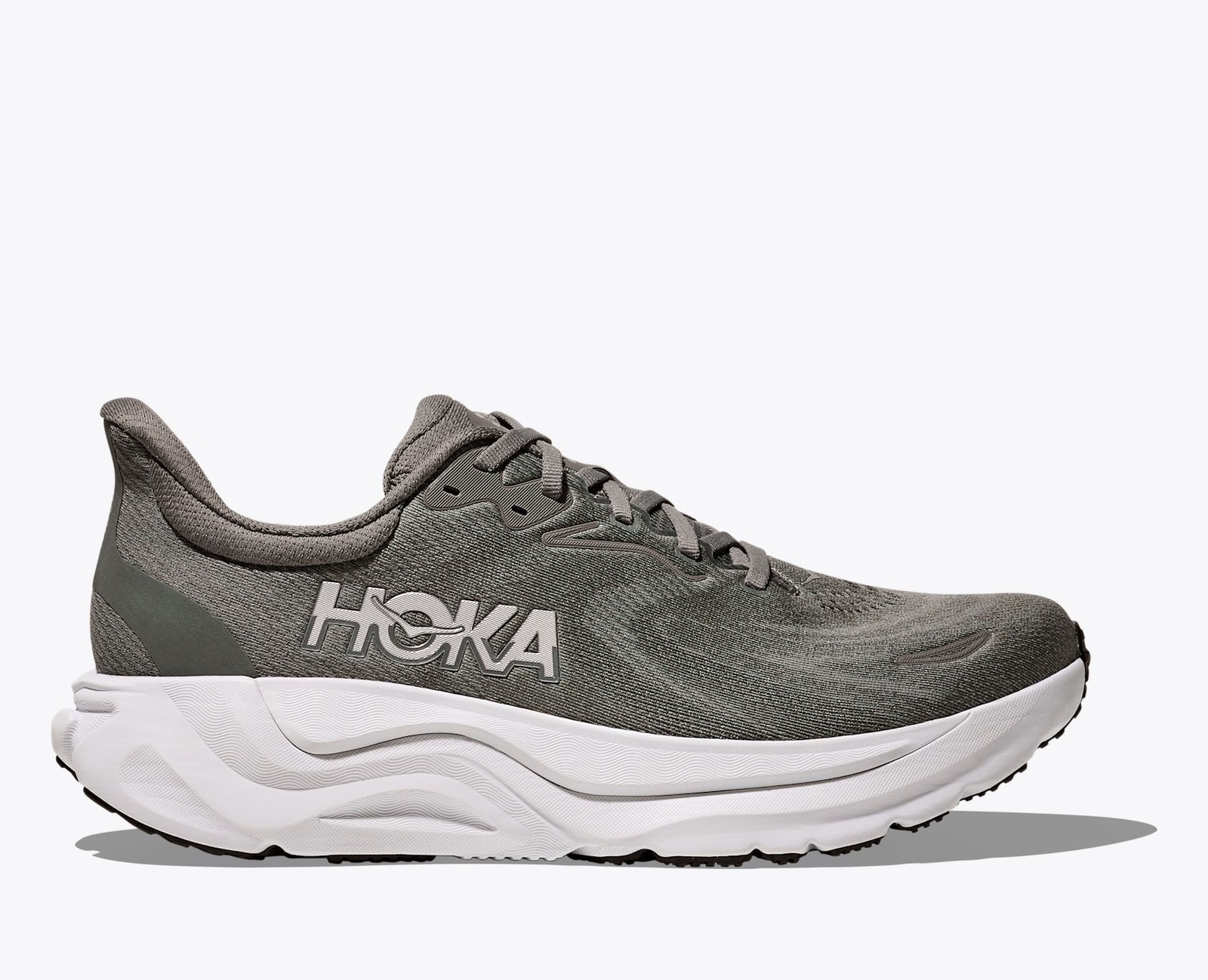
The Arahi 8 is for people who tried traditional stability shoes and hated how heavy and stiff they felt. At 9.8 oz it is the lightest shoe in this guide, and its H-Frame support works through the shape of the midsole rather than a firm post, so the ride stays smooth and a little bouncy. The 8 mm drop and 39 mm heel stack give it that familiar tall Hoka feel.
The trade off is support strength. The Arahi guides a mild to moderate roll nicely, but if you know you overpronate heavily, the Beast or the Kayano will hold you better. For mild overpronators and flat footed runners who mostly want a light daily trainer with a safety net, it is the most fun option here. List price is $150, and we found it at $100 at Running Warehouse and $119.95 at Holabird Sports on November 9.
No Amazon buy button on this one yet. The only listing code we found for the Arahi 8 came from a single source, and our rule is two matching sources before a button goes in.
What should wide flat feet buy for long runs? The New Balance Fresh Foam X 860 v15
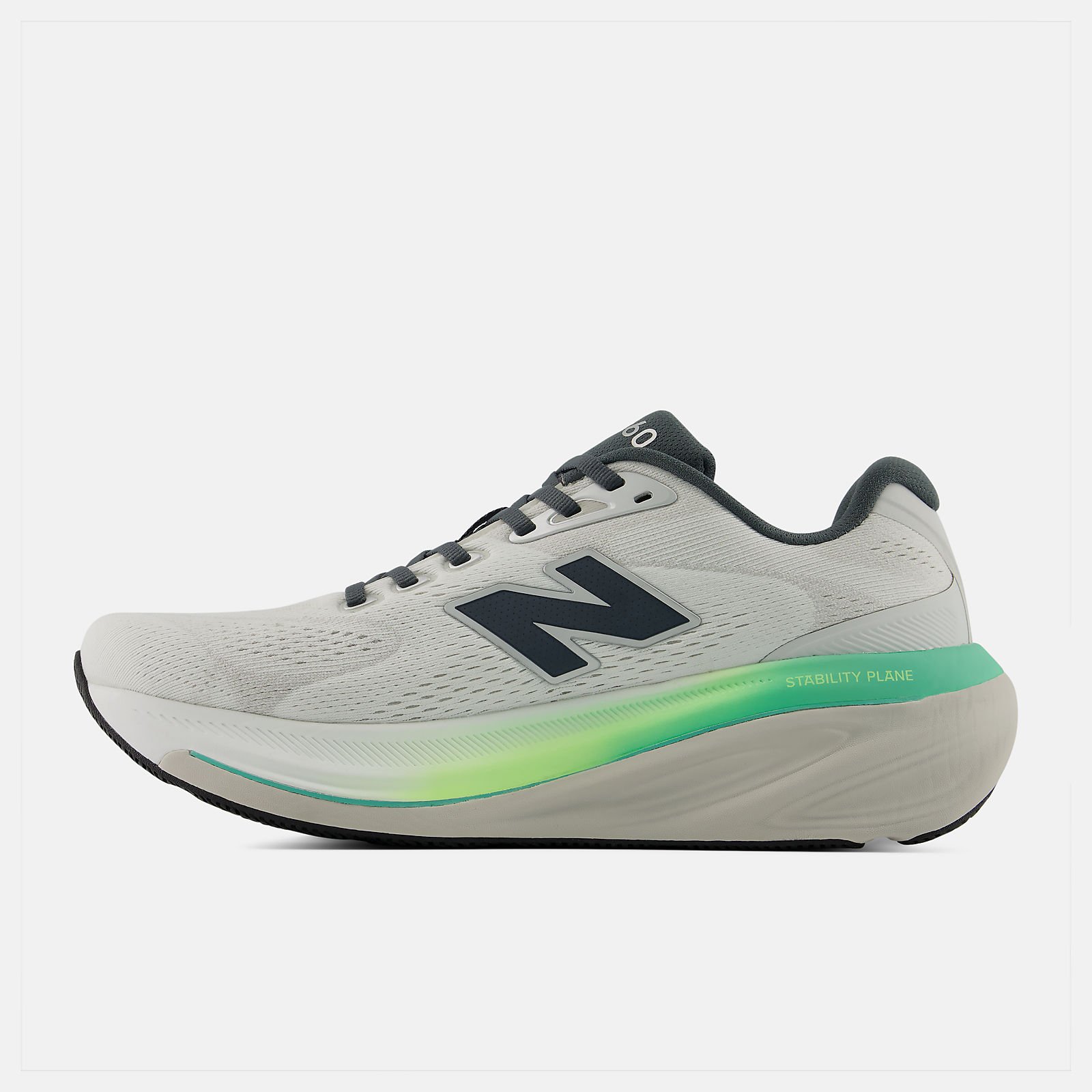
The 860 has been New Balance’s workhorse stability shoe for years, and the v15 is the current version. It combines Fresh Foam X cushioning with what New Balance calls Stability Plane technology, a shaped geometry in the midsole that resists the inward roll without a rigid post. The drop is 6 mm, the stack is tall at 40 mm, and most importantly for this guide, it comes in widths up to 2E and 4E. Flat feet spread under load, and a stability shoe that only comes in medium width will pinch exactly where your foot wants room.
At $149.99 direct from New Balance it is not the cheapest pick here, and it feels more traditional than the Arahi or Hurricane. But for high mileage runners with wide, flat feet, it is the shoe most likely to still feel good at mile 15. The release timing means full retail stock was still rolling out when we checked, so sizes may be patchy until the wider launch lands.
No Amazon buy button yet on this pick either, for the same two-source reason explained above.
How do you pick between these seven?
Match the shoe to the size of your roll and the shape of your foot, in that order. Mild roll and you want light and fun: Arahi 8. Moderate roll and daily miles: Adrenaline GTS 24 or Kayano 31. Strong roll: Kayano 32 or Beast GTS 24. Want maximum softness with your support: Hurricane 24. Wide feet: 860 v15 or the Beast, both of which come in proper wide sizes.
Two fitting tips that save returns. First, try stability shoes on late in the day, when your feet are at their largest, and bring your running socks. Second, your heel should feel held rather than clamped. Guide rail style shoes work at the heel and ankle, so a locked in heel with room at the toes is the right fit picture.
If you do not overpronate, our guide to the best running shoes of 2026 covers the neutral options.
Frequently asked questions
Are stability shoes and motion control shoes the same thing?
Not quite. Motion control is the strongest end of the stability category. Shoes like the Brooks Beast are motion control shoes, built for heavy overpronation. Most shoes in this guide sit in the regular stability band, which is enough for the majority of flat footed runners.
Can flat footed runners wear neutral shoes?
Some can, especially for short, easy runs, and a neutral shoe plus a supportive insole works for some people. But if your ankles roll in noticeably and your shoes wear down fast on the inner edge, a stability shoe is the safer default for daily training.
What about the Saucony Guide 18?
It is a good lighter stability shoe with a 6 mm drop and Saucony’s CenterPath support, and at sale prices around $91 to $115 it is tempting. We left it out of the main seven because the Hurricane 24 covers Saucony with a stronger cushion story for flat feet, but the Guide 18 is a fair budget alternative if you find your size on sale.
How long do stability shoes last?
Plan on roughly 300 to 500 miles, the same as most trainers. The support foams and rails compress with use, so a worn out stability shoe quietly stops doing its job before the upper looks finished. If your old pair suddenly feels flat and your legs feel beaten up, that is usually why.
Should I size up for flat feet?
Not automatically. Flat feet often need width more than length. If your toes are close to the front, go up half a size. If your foot spills over the sides of the midsole, look at the wide version of the same shoe first.
Pingback: Best Running Shoes (2026): Top 5 Picks Compared for Comfort and Speed
Pingback: Best Insoles for Standing All Day in 2026: 7 Picks for Nurses, Warehouse and Retail Workers - Fashion Lifestyle Blog