
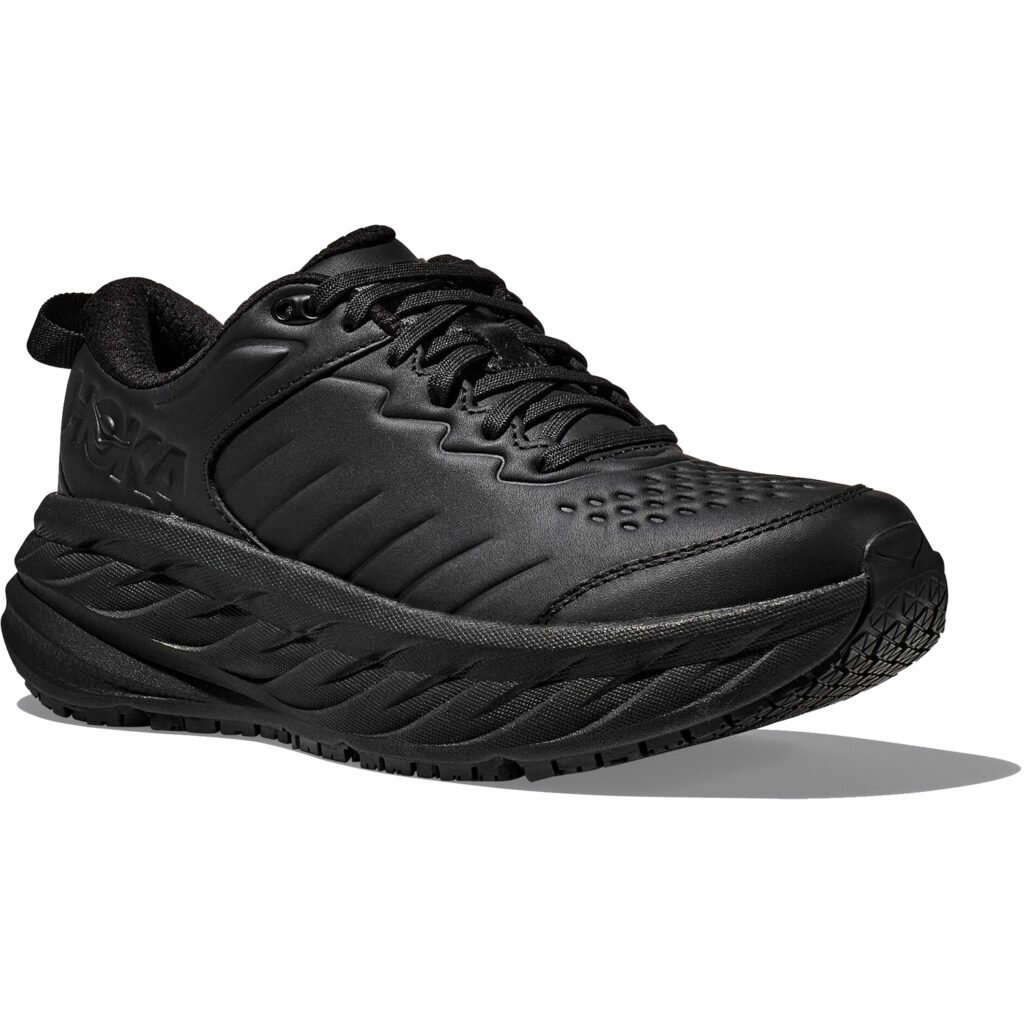
Short answer first: if you only buy one pair from this list, buy the Hoka Bondi SR. It is the shoe nurses on Reddit and in hospital corridors keep coming back to for 12-hour shifts: the thickest cushioning here, a leather upper that wipes clean, and a sole built to grip wet floors. If your feet roll inward or you have flat feet, skip to the Brooks Adrenaline GTS 24 instead.
A 12-hour shift is not a normal day in shoes. Nurses regularly log 10,000 to 15,000 steps on tile and linoleum, mixed with long stretches of standing still. A shoe that feels lovely on a 30-minute walk can feel very different at hour ten. So this list weighs what decides a shift: cushioning that has not packed down by evening, grip on wet floors, uppers that survive spills, and support that matches your arch. Prices were checked in November 2026.
Quick picks
| Pick | Best for | Upper | Slip resistant | Price checked Nov 2026 |
| Hoka Bondi SR | Best overall, wet floors | Water-resistant leather | Yes | Around $180 |
| Brooks Ghost 17 | Soft everyday cushioning | Mesh | No | Around $110 on sale, $150 list |
| Brooks Adrenaline GTS 24 | Flat feet, overpronation | Mesh | No | Around $140 |
| Clove Forte | Spills, easy cleaning | Fluid-resistant synthetic | Yes | See price on Amazon |
| Snibbs Spacecloud 2.0 | Work-shoe grip, sneaker looks | Water-resistant | Yes | Around $169 |
| Gales Frontline (STAND+) | Lightest pair, machine washable | Fluid-repellent, laceless | Yes | Around $99 |
| Dansko Professional | Standing still, clog fans | Leather | Rocker sole, not rated | Around $145 |
1. Hoka Bondi SR: best overall for most nurses
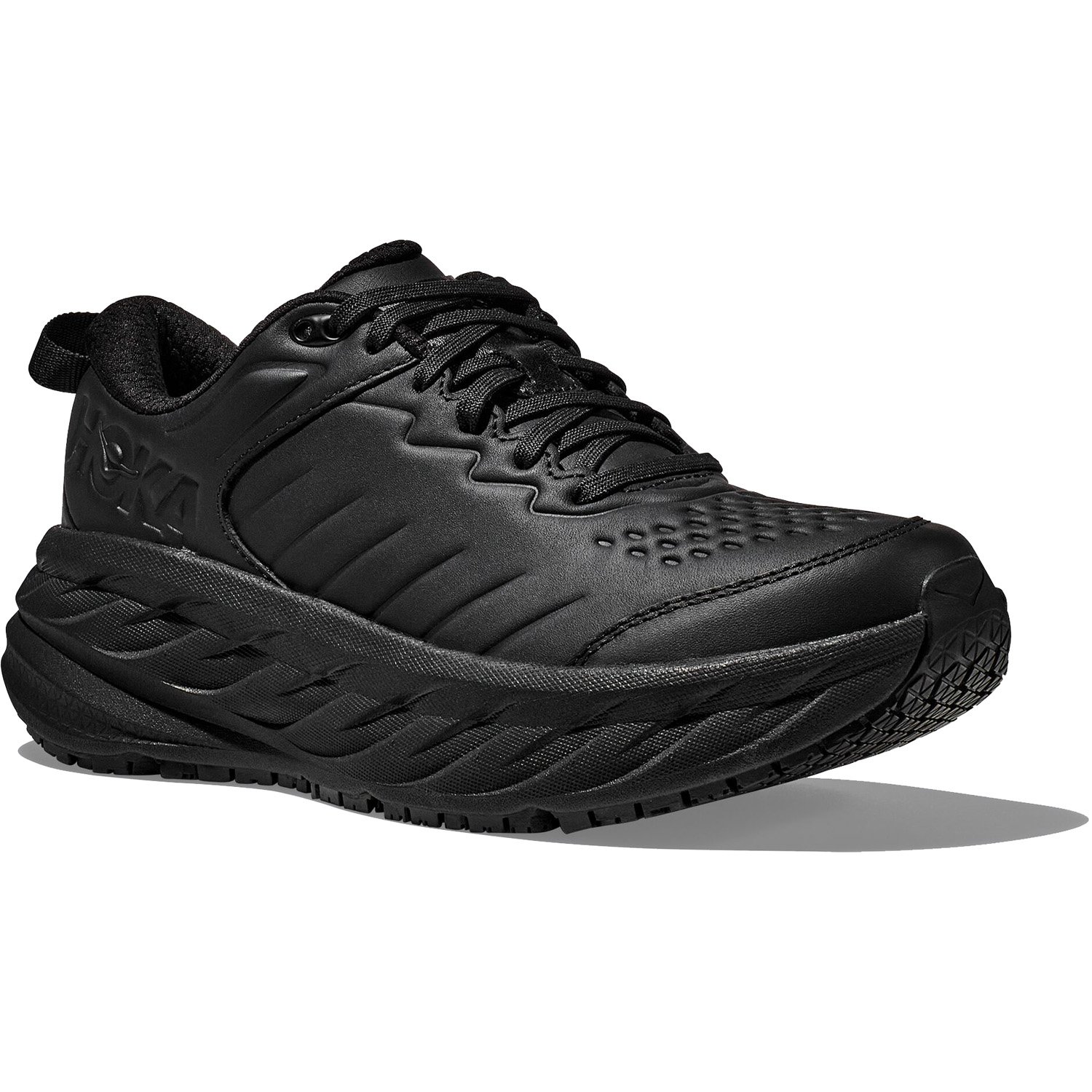
Who it suits: nurses who want maximum cushioning on floors that get wet or spilled on, or whose dress code wants a plain leather shoe.
The Bondi SR takes Hoka’s thickest road-shoe cushioning and rebuilds it as a work shoe: water-resistant leather upper instead of open mesh, slip-resistant rubber outsole, and a rocker shape that helps you roll through steps. In nurse forums and Reddit threads, the Bondi line comes up again and again, usually with the same story: sore knees and feet calmed down once the foam went under them.
Pros
- Thick EVA cushioning that stays protective late in a shift.
- Leather upper wipes clean after spills and does not soak through the way mesh does.
- Slip-resistant outsole, wide stable base, regular and wide fits.
Cons
- Bulky and heavy at about 11.5 oz, and the leather upper breathes poorly on warm wards.
- Priciest pick here at roughly $180, and the foam is a wear item, so heavy users replace pairs yearly.
Price: around $180.
2. Brooks Ghost 17: the safe, soft all-rounder
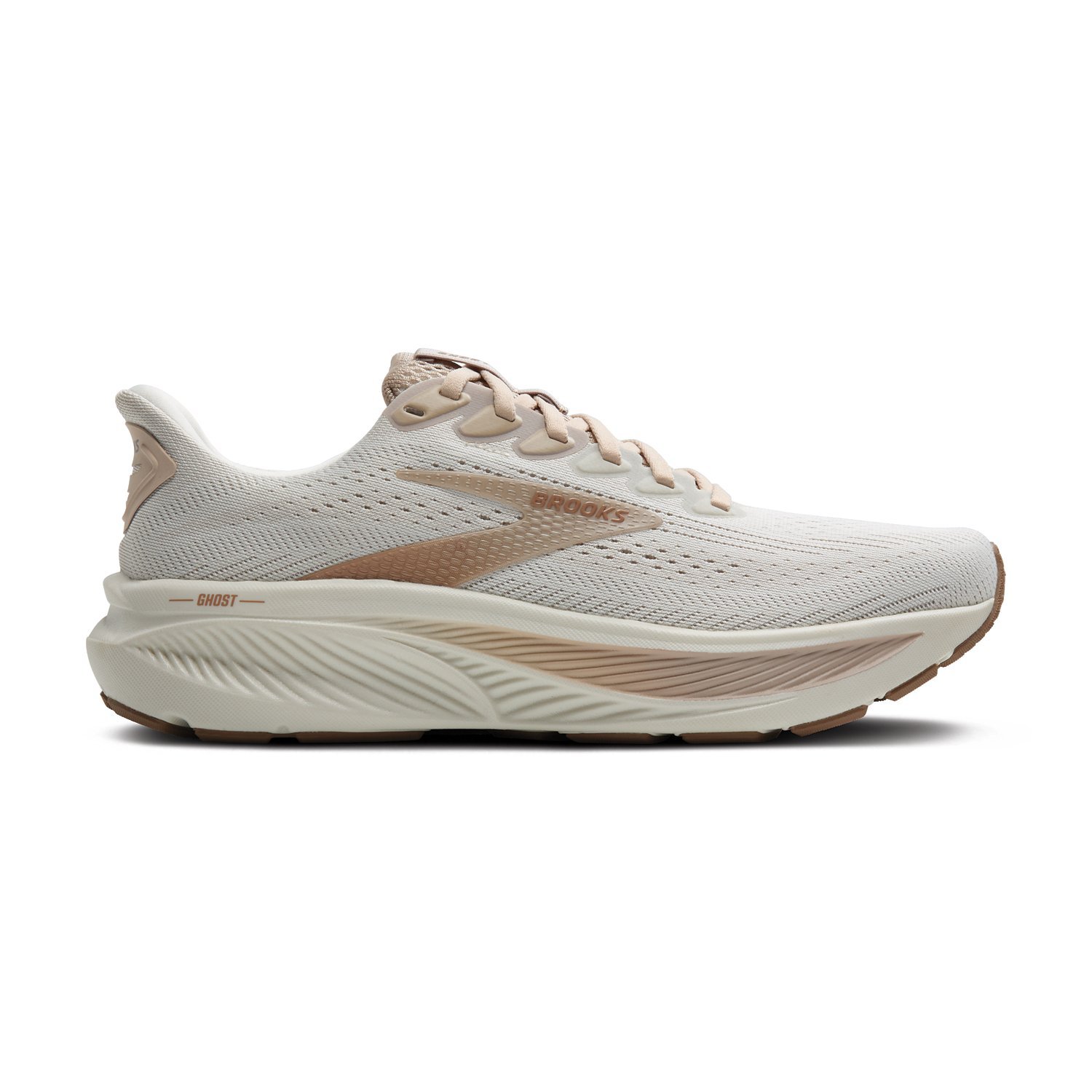
Who it suits: nurses with neutral feet who want a familiar shoe from the first shift, with lots of width and color options.
The Ghost has been the default running-shop recommendation for years, and nurses adopted it for the same reason runners did: nothing about it is extreme. The Ghost 17 adds a little more nitrogen-infused DNA Loft v3 foam, keeps a 10 mm drop, and uses a breathable mesh upper. Podiatry roundups list the Ghost line for its APMA Seal of Acceptance. It is also the softest shoe in our running shoes guide.
Pros
- Balanced, soft cushioning that suits mixed walking and standing.
- Huge fit range, narrow to extra wide, which matters when feet swell by hour eight.
- Durable outsole rubber that outlasts softer foams.
Cons
- Mesh upper is not fluid resistant, so spills go straight to your socks, and it is not sold as slip resistant.
- A touch stiff for the first few wears compared with Hoka foam.
Price: around $110 on sale, $150 list.
No Amazon button here: we could not verify one exact listing for this shoe, so search “Brooks Women’s Ghost 17” on Amazon and check style number 120431 before ordering.
3. Brooks Adrenaline GTS 24: best for flat feet and rolling ankles
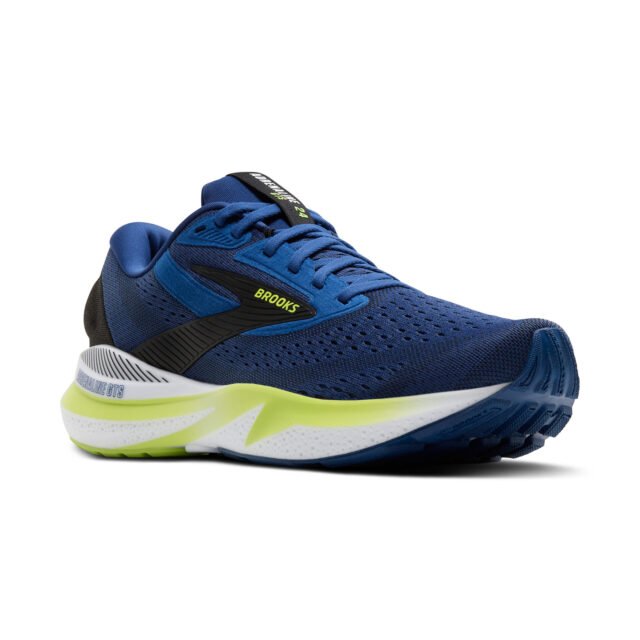
Who it suits: nurses whose feet roll inward or whose arches ache by midday. If flat feet are your main problem, this is the pick.
Where the Ghost is neutral, the Adrenaline adds GuideRails support, firmer foam either side of the heel that nudges your stride back in line when it drifts. It still uses DNA Loft v3 cushioning, so it does not feel like a corrective brick. It carries the APMA Seal of Acceptance and PDAC A5500 diabetic-shoe certification, which is why podiatrists keep naming it for flat feet. A newer GTS 25 exists, but the 24 is widely discounted now.
Pros
- Real stability for flat feet without a rigid arch post.
- Cushioning firm enough for long standing stretches, not just walking.
- Often discounted well under its around $140 list price since the newer model launched.
Cons
- Support feels noticeable at first; neutral-footed nurses may not need it.
- Mesh upper again, so no spill protection and no rated slip resistance.
Price: around $140 list; discounted variants seen near $99.
No Amazon button here: the exact variant we checked is currently unavailable on Amazon, so check which sizes are in stock on the listing before ordering.
4. Clove Forte: built for healthcare, and it shows
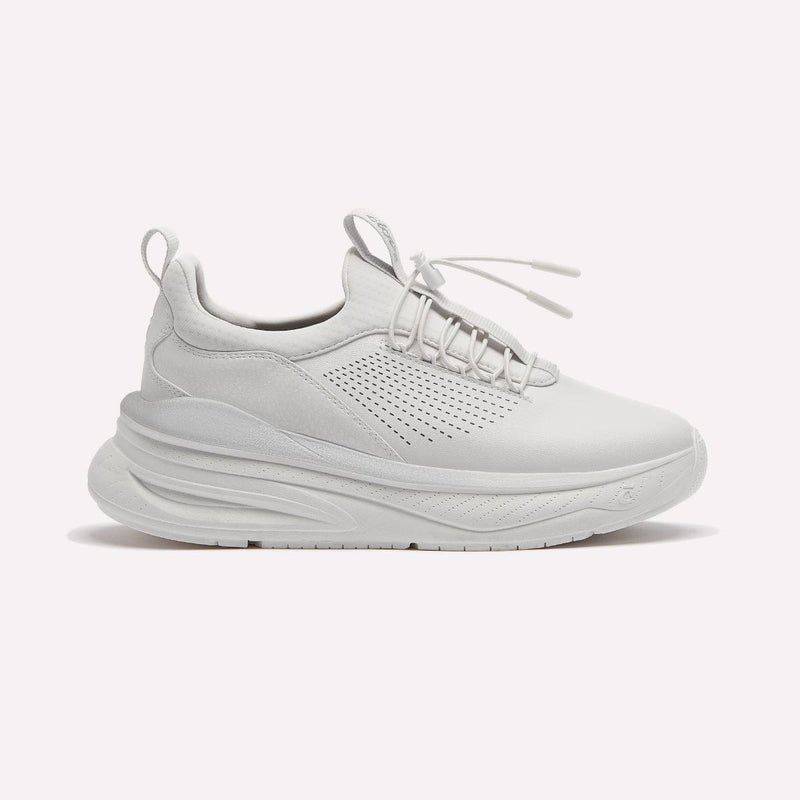
Who it suits: nurses in spill-heavy units, ER, ICU or theatres, where cleaning shoes needs to take seconds.
Clove designs only for healthcare workers, and most big roundups miss it because it sells mainly through its own store. The Forte uses a fluid-resistant upper you wipe clean, elastic no-tie laces you never touch with gloved hands, and a slip-resistant outsole rated to ASTM F3445. Nurse reviewers rate the wipe-clean upper as the reason they stay with the brand. The Forte 2 fits higher in the heel and narrower in the toe than the first version, so check the wide option if you need it.
Pros
- Fluid-resistant upper and no-tie laces are genuinely practical on a ward.
- Slip-resistant outsole with a named test standard (ASTM F3445).
- Built for 12-plus hours of standing, with a cushioned, stable base.
Cons
- Premium pricing, around $165 for the Forte 2 on the brand store.
- Repeat reviewers report support softening after a few months of heavy use, and the Forte 2 toe box runs narrow.
Price: around $165 on the brand store; see price on Amazon.
Search “Clove Forte shoes” on Amazon and confirm the seller is the Clove brand store.
5. Snibbs Spacecloud 2.0: the work shoe that looks like a trainer
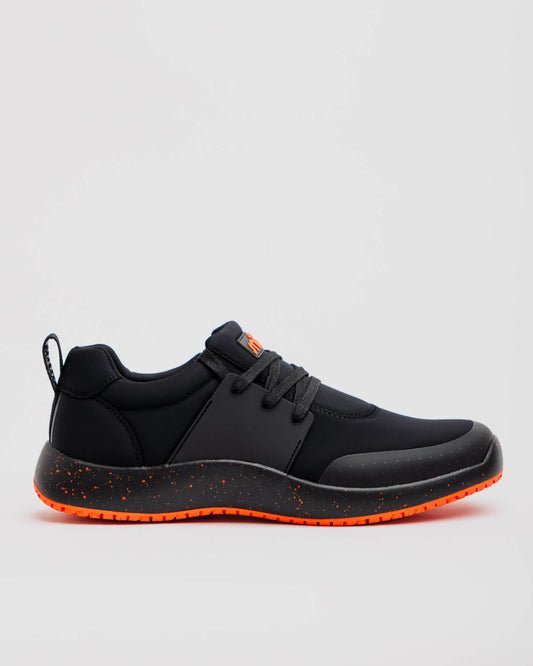
Who it suits: nurses who need certified grip and water resistance but want a shoe that looks like a trainer, not a work shoe.
Snibbs was founded by a chef, a hospitality veteran and a foot-health doctor. The Spacecloud 2.0 has a water-resistant upper, a slip-resistant outsole tested to ASTM standards, and an OrthoLite insole owners describe as comfortable straight out of the box. Servers and healthcare workers praise the grip on wet floors. The counterweight sits in the brand’s public review pages: some owners report pairs splitting inside six months, and arch support divides opinion.
Pros
- Slip-resistant and water-resistant, in a clean sneaker shape that passes most dress codes.
- No break-in period for most owners, and lots of color options.
- Wide size range, including wide fits in the 2.0.
Cons
- Durability complaints are a real pattern, including pairs failing around six months.
- Mild arch support, so flat feet may still need an insole swap.
Price: around $169 list; the brand store currently lists it at $126.75 where in stock.
Search “Snibbs Spacecloud 2.0” on Amazon and buy from the brand listing.
6. Gales Frontline (now STAND+): the lightest, washable option
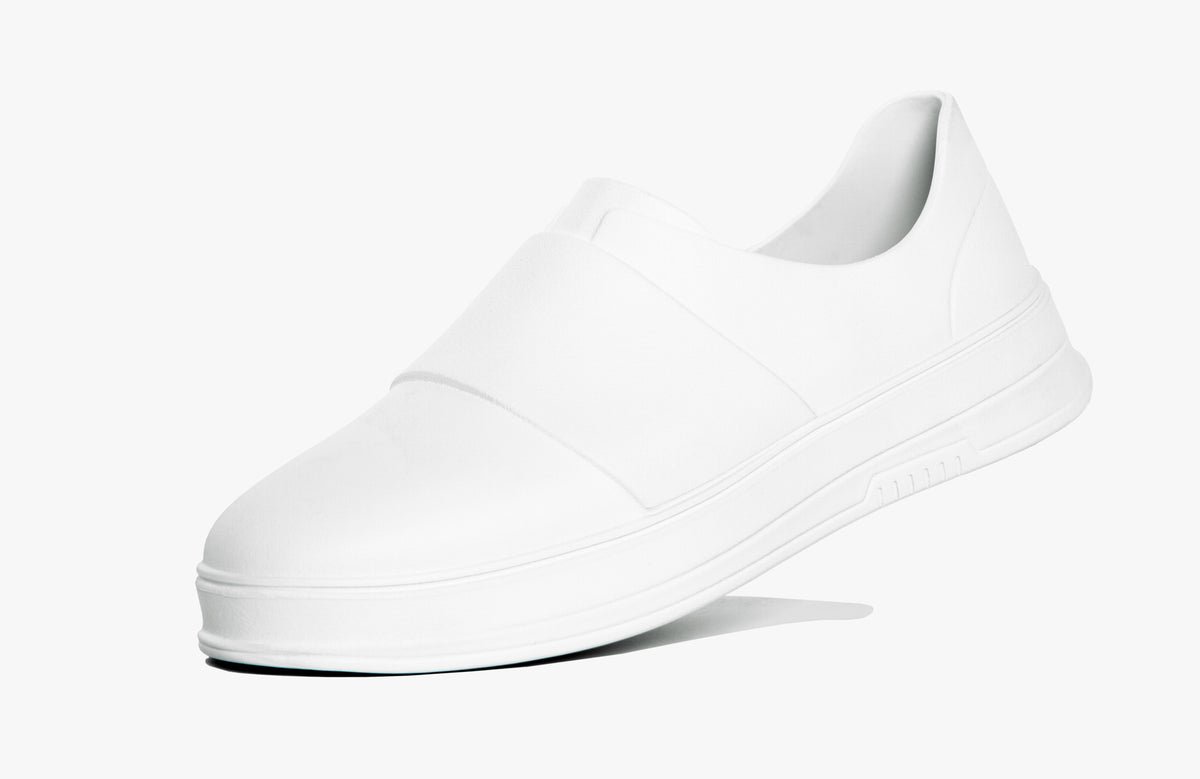
Who it suits: nurses who hate heavy shoes, want a laceless slip-on, and like being able to machine wash the whole shoe.
Gales, now sold under the STAND+ name, was designed with healthcare workers in 2020 and still flies under most big lists. The Frontline is laceless, fluid-repellent and antimicrobial, with an XL Extralight sole far lighter than the Hoka or Dansko here, and slip resistance tested to the SATRA TM144 standard. The whole shoe is machine washable, which no other pick here can claim. Many nurses call it the first shoe that left their feet pain-free after 12 hours, while some find it narrow with a stiff top strap. The newer Pro Line is wider.
Pros
- Featherlight build that tired legs notice by hour ten.
- Machine washable and bleach-friendly, no laces to trap fluids.
- Around $99, the cheapest healthcare-specific shoe here.
Cons
- Fit runs narrow, and some owners find the top strap uncomfortable.
- Younger brand, so a shorter track record than Brooks, Hoka or Dansko.
Price: around $99.
Search “Gales Frontline nurse shoes” on Amazon; check it is the Frontline or Pro Line.
7. Dansko Professional: the clog that outlasts everything
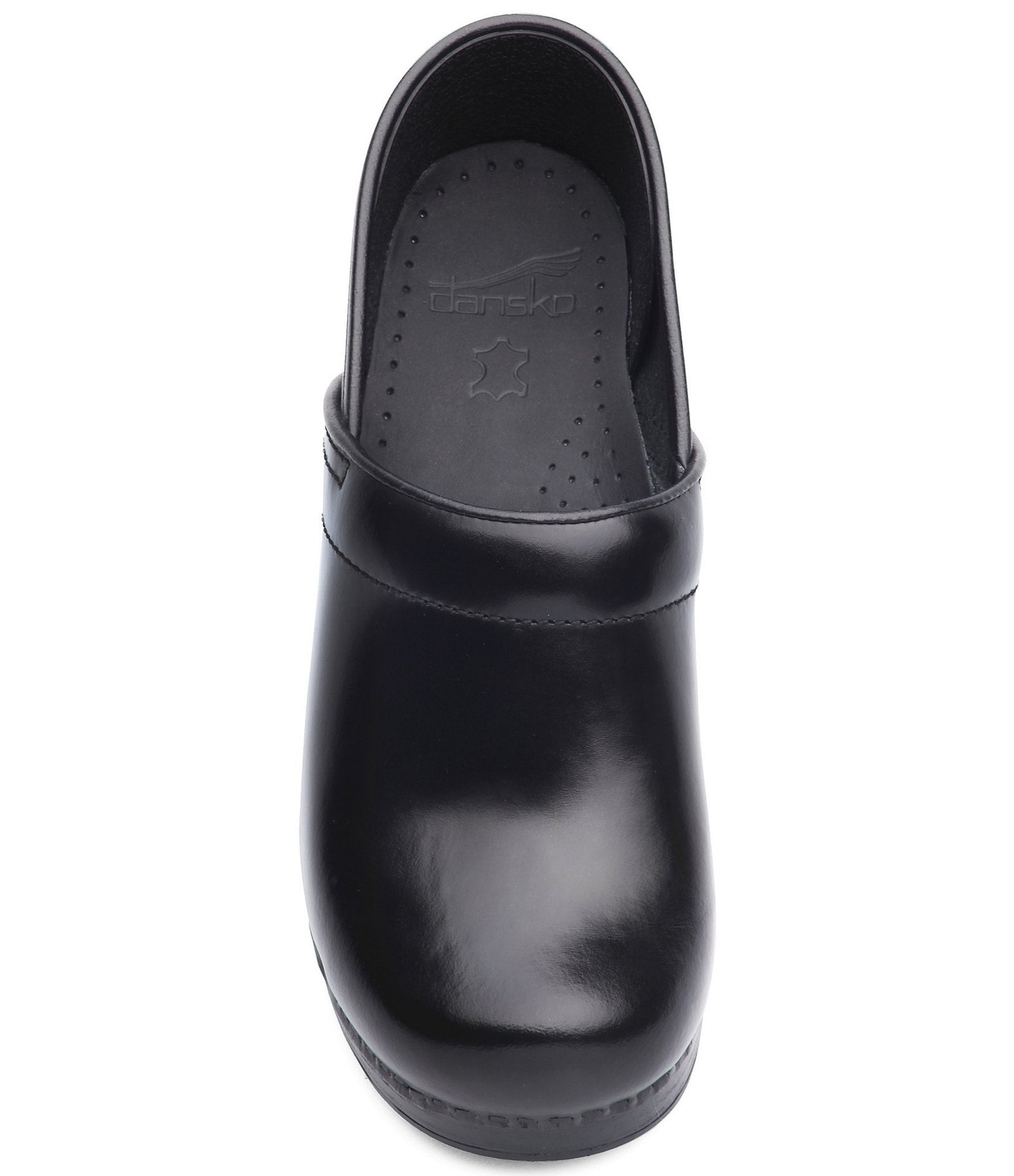
Who it suits: nurses who stand more than they walk, and anyone who wants one pair to last years instead of seasons.
The Professional clog has been on hospital floors for decades, and owners in long-lasting-shoe forums report pairs going five years and more. The formula: a firm leather upper that wipes clean, a roomy reinforced toe box, a contoured footbed with strong arch support, and a rocker sole. It carries the APMA Seal of Acceptance. It is also the most divisive shoe here: the firmness fans love makes the break-in rough, and the high, stiff heel rolls ankles for some wearers.
Pros
- Longevity in a different league from foam trainers, which lowers yearly cost.
- Strong arch support and a toe box that lets swollen feet spread.
- Leather upper shrugs off spills and wipes down fast.
Cons
- Heavy, stiff break-in that can take weeks, and the tall sole can roll ankles.
- Not a shoe for fast walking or running to a call.
Price: around $145.
Search “Dansko Women’s Professional clog” on Amazon and order your EU size.
What 12-hour shifts do to your feet, and what to look for
Standing on hard floors for half a day compresses the fat pads under your heel and forefoot, which is why feet that feel fine at 7 am ache by 3 pm. Feet also swell over a shift, so a shoe that fit at the start can feel a size small by the end. That is why experienced nurses buy work shoes half a size up, or in a wide fit.
Four things matter most. First, cushioning that resists packing down: thicker foams like the Bondi SR’s stack or Brooks’ DNA Loft outlast thin soles. Second, grip: floors mix tile, linoleum and liquid, so a rated slip-resistant outsole is a safety feature, and some employers require it. Third, the upper: mesh breathes but drinks spills, while leather and fluid-resistant synthetics wipe clean. Fourth, support that matches your arch: flat feet do better with guidance like the Adrenaline’s GuideRails or a firm clog footbed, while high arches prefer neutral max cushioning. If your shoes are fine but your arches still ache, a good insole for standing all day can help before you buy a new pair.
Rotation helps more than any single shoe: two pairs on alternate days last longer because the foam recovers. Compression socks are the cheapest upgrade here. Most foam trainers are done between 300 and 500 miles, which a busy nurse covers in six to nine months.
Mistakes nurses make when buying shift shoes
Buying your normal size. Feet swell over 12 hours. If your toes touch the end at hour one, they will be sore by hour ten.
Judging comfort in the shop. A shoe that feels soft for two minutes can feel empty at hour nine. Buy somewhere with a real returns window.
Wearing worn-out shoes because they still look fine. Foam dies before uppers do. If your knees and back ache again in an old pair, the midsole has likely packed down.
Ignoring the dress code. Some units require leather uppers, closed heels or rated slip resistance. Check before you spend.
Expecting one shoe to fix foot pain. Plantar fasciitis and similar problems need proper assessment. A better shoe helps, but it is not a treatment.
Frequently Asked Questions
What shoes do nurses actually wear the most?
The same names repeat: Hoka’s Bondi line, Brooks Ghost and Adrenaline, Dansko clogs, and healthcare brands like Clove, Snibbs and Gales. The Bondi SR is the most common pick when cushioning and grip both matter.
Are running shoes good for nursing shifts?
Yes, with two caveats. Trainers like the Ghost 17 are comfortable for high-step shifts, but most running shoes have mesh uppers that soak up spills and outsoles that are not rated slip resistant. If your unit is spill-heavy or your employer requires rated grip, pick a work version like the Bondi SR.
How often should nurses replace their shoes?
For foam trainers, plan on six to nine months of full-time shifts, or whenever the cushioning feels flat and aches return. Firm clogs like the Dansko Professional last much longer, often years.
Which shoes are best for nurses with flat feet?
The Brooks Adrenaline GTS 24, thanks to its GuideRails support and APMA acceptance. Firm clogs suit some flat feet too, and a good insole helps if your arches still ache.
Do nurses get discounts on these brands?
Often, yes. Brooks, Hoka, ASICS and Skechers run healthcare discount programs, usually verified through ID.me. Check before paying full price.
Are clogs or trainers better for 12-hour shifts?
Trainers suit nurses who walk miles per shift. Clogs suit nurses who mostly stand in one place and want durability. Many nurses keep one of each and rotate.
The verdict
For most nurses, the Hoka Bondi SR is the buy: the strongest mix of cushioning, grip and cleanability, at about $180. Flat feet should go straight to the Adrenaline GTS 24 at about $140. On a tighter budget, the Gales Frontline at about $99 and the wipe-clean Clove Forte are the healthcare-specific picks worth your money. Size for swollen end-of-shift feet.
Updated November 2026. Prices may vary by size, color and seller.
Pingback: Best Insoles for Standing All Day in 2026: 7 Picks for Nurses, Warehouse and Retail Workers - Fashion Lifestyle Blog